
Perchè la Crema Pasticcera diventa... crema?
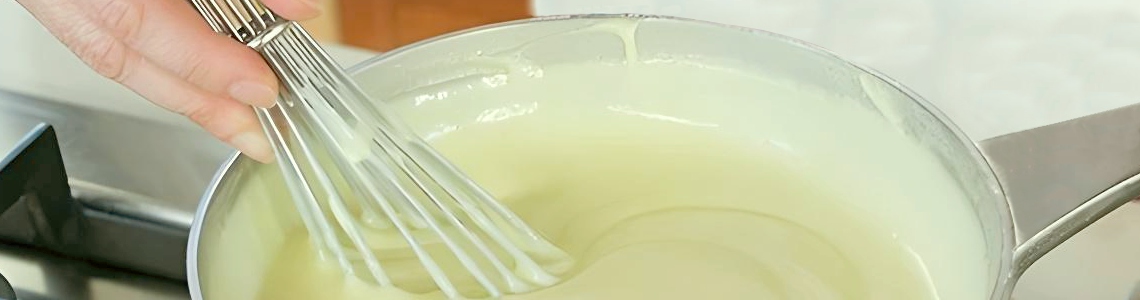
La crema pasticcera è la regina in pasticceria! È il complemento ideale di moltissime torte e paste dolci, siano esse paste sfoglie, bignè, bomboloni, torta della nonna, crostate e più ne ha più ne metta!
Ne abbiamo parlato nell'articolo intitolato "La regina in pasticceria: la crema." ed abbiamo visto che preparare una crema pasticceria in modo tradizionale è relativamente semplice: latte, zucchero, tuorli, farina, un pizzico di aromi e poi tutto nel pentolino a bollire, e pian piano la crema si forma sotto i nostri occhi.
MA... PERCHÈ LA CREMA... DIVENTA CREMA...
Nella crema a caldo, di fatto noi cuociamo della farina o dell'amido nel latte.
Per effetto del riscaldamento i globuli di amido contenuti nella farina (o nell'amido nativo), in presenza di latte o altro liquido, cominciano a gelatinizzare, ovvero si rompono e si idratano progressivamente; l’amido perde la sua struttura cristallina e l'amilosio e l'amilopectina (ovvero i componenti dell'amido) fuoriescono ed entrano in soluzione con il liquido formando dei legami con le molecole di acqua presenti, formando la cosiddetta salda d’amido che ha proprietà leganti e addensanti. Successivamente tale soluzione lega attorno a sé tutti gli altri ingredienti e si forma quella massa cremosa che noi chiamiamo crema pasticcera. Nella preparazione della crema non avviene quindi una reazione chimica ma un processo fisico di trasformazione originato dal calore.
I tuorli giocano anch'essi un ruolo importante nell'addensare la massa cremosa e dare alla crema tenuta e consistenza.
Gli zuccheri, il latte invece (che teoricamente potrebbe essere sostituito con acqua), assieme agli aromi, dolcificano ed arricchiscono di sapori la massa così ottenuta in quel buonissimo prodotto che chiamiamo per l'appunto “crema pasticcera”
Un aspetto importante da sottolineare è la necessità di evitare la formazione di grumi. Oltre alle accortezze pratiche già dette nell'articolo citato, è importante aggiungere il latte agli altri ingredienti al di sotto della temperatura di gelificazione dell’amido, che varia tra i 50° e 70° C a seconda dell'origine vegetale dell'amido, e poi mescolare continuamente gli ingredienti fino alla completa gelatinizzazione dell'amido.
Spesso invece si versa l'amido con gli altri ingredienti nel latte caldo, ma poiché la farina non si disperde subito nell'acqua, si formano degli agglomerati e così facendo inneschiamo la gelatinizzazione veloce dell'amido all'esterno di questi agglomerati e non all'interno: il gel esterno impedisce la diffusione del liquido all'interno di tali agglomerati e quindi l'idratazione di tutti i granuli di amido presenti nella miscela.
Per facilitare la giusta gelatizzazione, a livello professionale, viene utilizzato un apparecchio detto cuocicrema, che provvede al mescolamento ed alla cottura degli ingredienti, permettendo di regolare le temperature, i tempi di cottura e la velocità di agitazione. A casa, con un po' di pratica, il risultato sarà lo stesso!
Per semplificare la lavorazione, è comunque disponibile a catalogo un Preparato per Crema Pasticcera Tradizionale a Caldo. Clicca qui.
LA CREMA... A FREDDO...
Ogni pasticcere conserva gelosamente la sua ricetta di crema ma, senza pasticciare tanto, è possibile ottenere un'ottima crema, setosa e delicata anche senza riscaldare il latte e mescolare a lungo. Come?
Utilizzando il nostro "Preparato per Crema Pasticcera veloce" con un po' di latte o acqua, una "mescolatina" e la crema è pronta in un minuto! Ma come?!
La conservazione della crema pasticcera è stato uno dei motivi che ha portato allo studio di un preparato per crema pasticceria stabile, senza utilizzare uova, e veloce, ma che dovesse essere buona come una crema tradizionale fatta caldo.
La soluzione è nata con l'utilizzo di amidi modificati anziché con l'utilizzo di farina o amidi nativi.
L'aggettivo modificato non si riferisce ad alcun trattamento di manipolazione genetica ma si riferisce a trasformazioni fisico/chimiche dell'amido nativo.
Nell'amido modificato la gelatinizzazione avviene a freddo ovvero a temperatura ambiente e non necessità di alcun riscaldamento. Lo si aiuta un po' con l'utilizzo di sostanze addensanti al posto del tuorlo d'uovo (ad esempio l'alginato di calcio).
La conservazione della crema può essere poi allungata con l'aggiunta di sali di conservazione (come il potassio sorbato).
La preparazione è semplice e la dose è abbastanza standardizzata: a titolo indicativo 100 grammi di preparato per crema pasticcera vanno disciolti in 280 grammi di latte. Se si utilizza il latte di grammi ne servono meno: 260.
Se si interessato al nostro Preparato per Crema Pasticcera veloce clicca qui.
Nel dettaglio, come detto precedentemente, i principali ingredienti utilizzati in una crema veloce sono:
Amido modificato: è un amido parzialmente degradato opportunamente con processi che possono essere chimici, fisici o enzimatici:
-
chimici: trattamento con idrossido di sodio o potassio (trattamento con alcali) oppure con acidi inorganici;
-
fisico: ad esempio tramite pre-riscaldamento;
-
enzimatici: parziale idrolisi per aumentarne l'idrosolubilità con idrossido di sodio o potassio (trattamento con alcali) oppure con acidi inorganici.
Potassio sorbato: è un inibitore molto efficace nella lotta contro i più comuni microrganismi responsabili del deterioramento degli alimenti. Codificato in Europa con il codice E202, è il sale di potassio dell'acido sorbico, presente quest'ultimo nei frutti del Sorbo delle Montagne Europee o Farinaccio (Sorbus aucuparia), dal quale prende il nome.
Alginato di calcio: secondo la codificazione Europea è l'additivo con il codice E404. Si tratta di sale calcico dell'acido alginico (E400) che è un polisaccaride naturale prodotto da diverse alghe appartenenti alla famiglia delle Phaeophyceae.