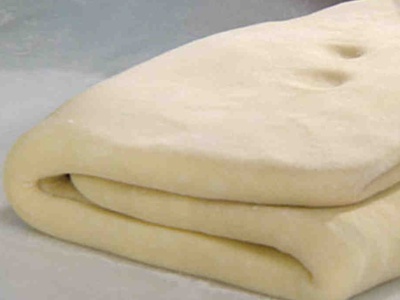
La preparazione di "Sua Maestà" la Pasta Sfoglia
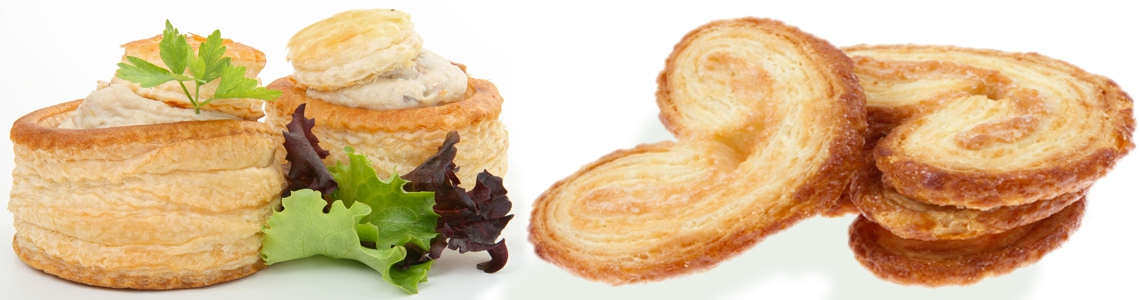
Preparare la pasta sfoglia è più difficile da descrivere che da farsi anche se onestamente una certa esitazione iniziale può esserci.
Per preparare la pasta sfoglia si devono preparare 2 impasti:
-
un impasto a base di farina (“pastello”);
-
un impasto molto ricco di burro, oppure altro grasso come la margarina vegetale, e poca farina (“panetto”).
Poi si passa alla sua realizzazione. Vediamo il tutto con il tipico dosaggio 1:1 ovvero utilizzando 1 Kg di farina ed 1 Kg di burro.
 PASTELLO:
Si prendono 700 g di farina e si impasta con sale e acqua quanto basta, fino ad ottenere un impasto liscio, morbido ma asciutto.
PANETTO:
Si prendono 300 g di farina e si impastano con 1 Kg di burro, fino ad ottenere un impasto omogeneo e mediamente consistente. È molto importante che il burro abbia la giusta consistenza, cioè che non sia troppo duro (basta tirarlo fuori dal frigo per tempo).
Scopri le nostre basi bilanciate per dolci
PREPARAZIONE INIZIALE:
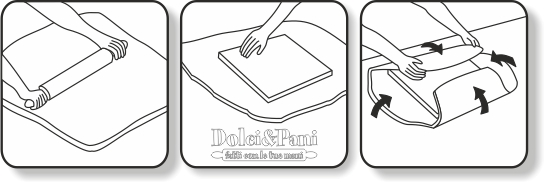
Innanzitutto si stende il pastello allo spessore di 1-2 cm circa, poi si stende anche il panetto (che avrà uno spessore maggiore) che va sistemato al centro del pastello, lasciando scoperto un po’ di pasta su tutti i lati. I bordi del pastello serviranno, tirandoli un po’, a richiudere completamente il panetto. Sigillarlo quindi bene con i bordi del pastello.
PRIMA PIEGATURA:
Infarinare il tavolo e cominciare a stendere il tutto allo spessore di 2 cm circa. Spianare la sfoglia sempre dallo stesso lato così da allungarla ed in pari tempo appiattirla. Quando è stesa ad uno spessore di circa 1,5-2 cm, prendere un bordo (dal lato corto) e ripiegarlo su sé stesso per un terzo della lunghezza della sfoglia. Quindi prendere l’altro bordo del lato corto e ripiegarlo ricoprendo il tutto. Questa è la cosiddetta piega semplice od anche “piega a 3”.
SECONDA PIEGATURA:
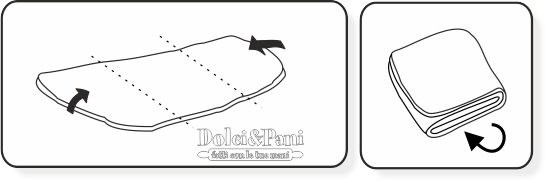
Ruotare la sfoglia di 90 gradi e iniziare a stenderla sempre per lo stesso verso. Quando è ad un’altezza di 2 cm circa, prendere ambedue i bordi del lato corto, piegandoli farli combaciare al centro della sfoglia ed infine ripiegare a libro con 4 strati. Questa è la cosiddetta piega doppia o “piega a 4”.
TERZA E QUARTA PIEGATURA:
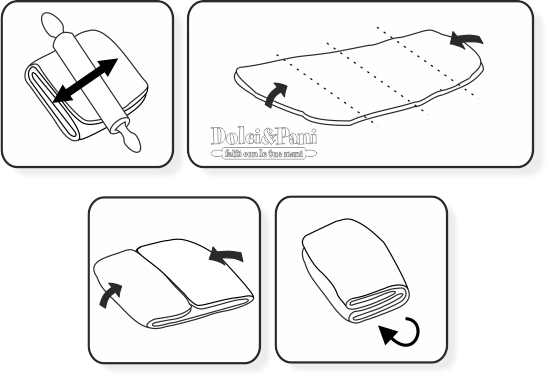
Si ripetono i passaggi precedenti (quindi date un’altra “piega a 3” e poi “una piega a 4”). Ricordarsi ad ogni piegatura di ruotare di 90 gradi la pasta lavorata.
FORMATURA:
Quando si è data l’ultima piega si stende tutta la sfoglia allo spessore desiderato (2-4 millimetri) e quindi la si taglia o la si utilizza a seconda della forma del dolce che si vuole ottenere.
AVVERTENZE:
Scopo di questa spiegazione è illustrare i passaggi per la formatura della pasta sfoglia. Non si danno ricette, di per sé la ricetta è semplice anche se esistono numerose versioni diverse tra loro.
Vogliamo infine informare di alcune avvertenze tipiche della lavorazione della ricetta tradizionale:
-
La farina utilizzata deve essere adatta per sfoglia, con un “W” elevato (cioè deve essere molto ricca di glutine). Difficile trovarla nei normali negozi e supermercati.
-
Nella preparazione del panetto è molto importante, come abbiamo già detto all'inizio ma è giusto ribadirlo, che il burro abbia la giusta consistenza, quindi va tirato fuori dal frigorifero un po’ di tempo prima di usarlo (ma non deve essere troppo rammollito).
-
Tra una piega e l’altra, l’impasto va avvolto con carta da forno o un telo pulito di plastica e messo in frigo a “riposare” per almeno un’ora.
-
Dopo l’ultima piega, prima di formare e stendere allo spessore desiderato, mettere nuovamente in frigo. Tutti questi passaggi in frigo sono necessari per ottenere una sfoglia, dopo la cottura, regolare ed uniforme!
-
Al posto del burro, esistono delle margarine plastiche in forma piatta specifiche per sfoglia (vedi "scheda prodotto"): la scelta migliore e più pratica per preparare un prodotto ben sfogliato, friabile e leggero. Se si utilizza questo tipo di margarina non si prepara più il “panetto” ma al suo posto va messa la margarina tal quale (e quindi la farina utilizzata per preparare il “panetto” sarà aggiunta a quella per preparare il “pastello”).
-
Da segnalare infine che non tutti seguono il sistema di piegatura indicato, quello più usato, ma c'è chi anche fa 3 pieghe da 4, oppure 3 pieghe da 3.